What’s Really Behind Today’s Dried Fruit Packaging Bags Boom
If you sell nuts, raisins, dates or trendy freeze-dried fruit, you’ve probably noticed how quickly the shelf has changed. Recyclable films, velvety matte finishes, QR codes, nitrogen-flush pouches—the works. I’ve spent the past year talking with converters and brand owners from Hebei to Hamburg, and the one product I keep getting asked about is Dried Fruit Packaging Bags made in Xiongxian Economic Development Zone (East Zone), Xiongan New Area, Hebei Province, China. To be honest, the combination of barrier performance and customization is getting hard to ignore.

Industry trends I’m seeing
- Shift to mono-material PE/PE for recyclability, with EVOH for barrier when needed.
- Premiumization: soft-touch varnish, window + matte combos, and high-opacity whites.
- E-commerce ready pouches: tear-resistance and seal integrity are non-negotiable.
- Data on pack: roasting dates, desiccant QR, and batch traceability—actually useful.
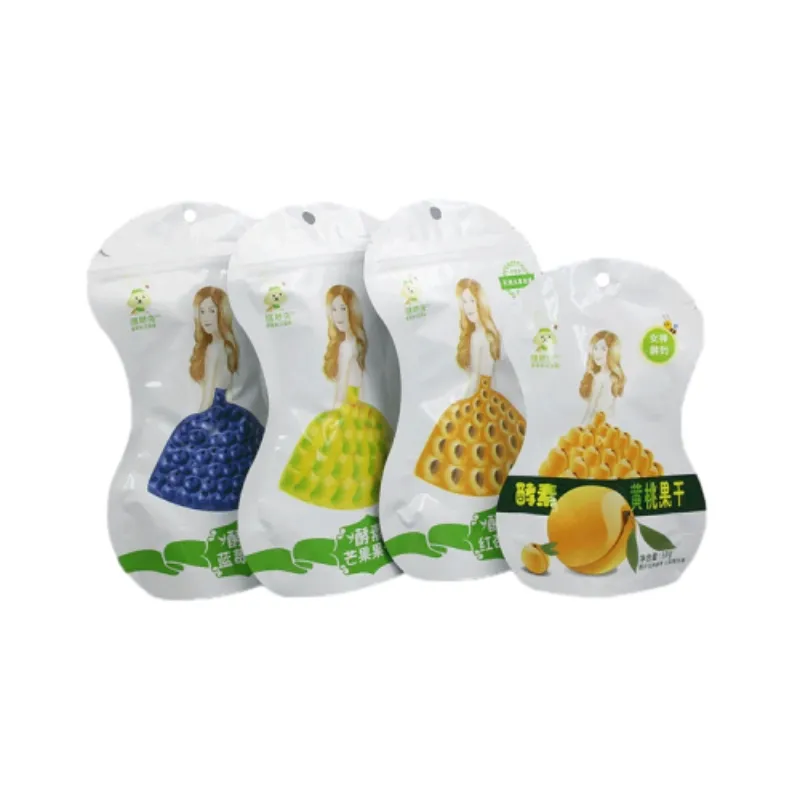
Typical applications
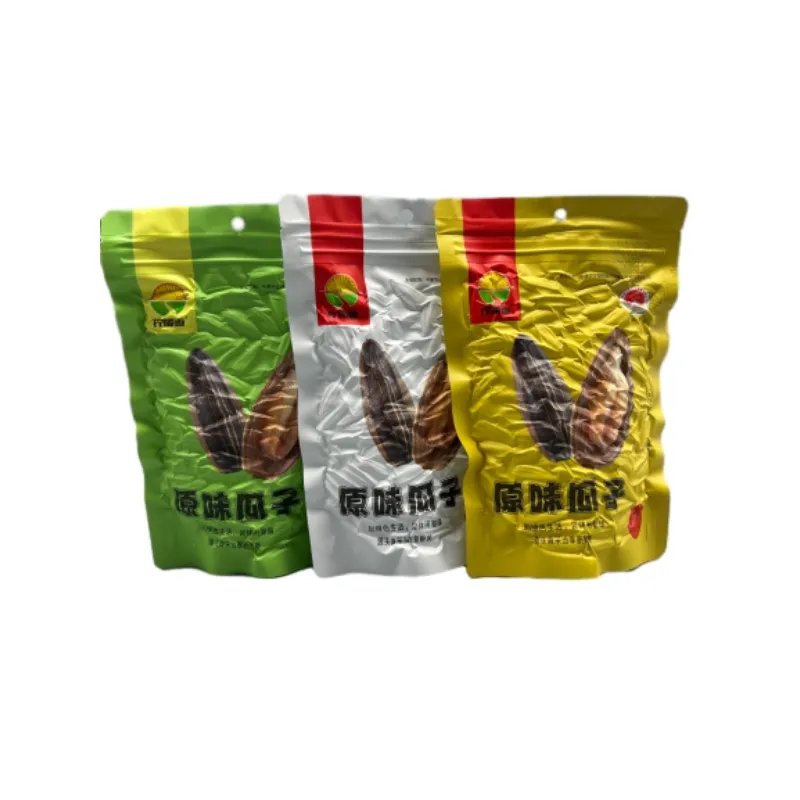
Retail stand-up pouches (50 g snack packs to 1 kg club sizes), gusseted refill bags for pantry storage, and flat pouches for sampler kits. Many customers say Dried Fruit Packaging Bags with zippers drive repeat usage and better reviews—small detail, big impact.
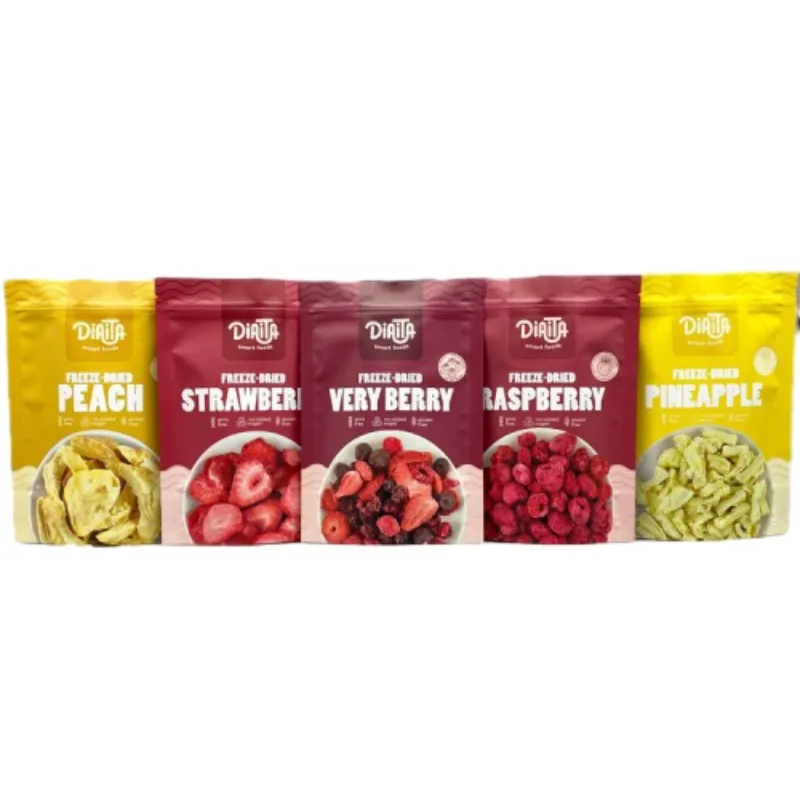
Product specifications (real-world values)
| Structures |
PET/AL/PE; PET/PE; MOPP/PE; NY/PE; PE/PE (recyclable, with EVOH option) |
| Thickness |
≈70–150 μm (common); custom on request |
| OTR |
≤0.1 cc/m²·day (with AL); ≈0.5–2 (EVOH); around 3–8 (clear PET/PE) |
| WVTR |
≤0.5 g/m²·day (AL); ≈1–3 (EVOH); ≈3–6 (clear) |
| Formats & features |
Stand-up, quad-gusset, flat; zipper/VELCRO-type; tear notch; euro hole; degassing valve optional |
| Print |
Rotogravure up to 9–10 colors; digital short runs; matte/gloss combo |
| Compliance |
BRCGS Packaging, ISO 9001, FDA 21 CFR, EU 1935/2004 (declared) |
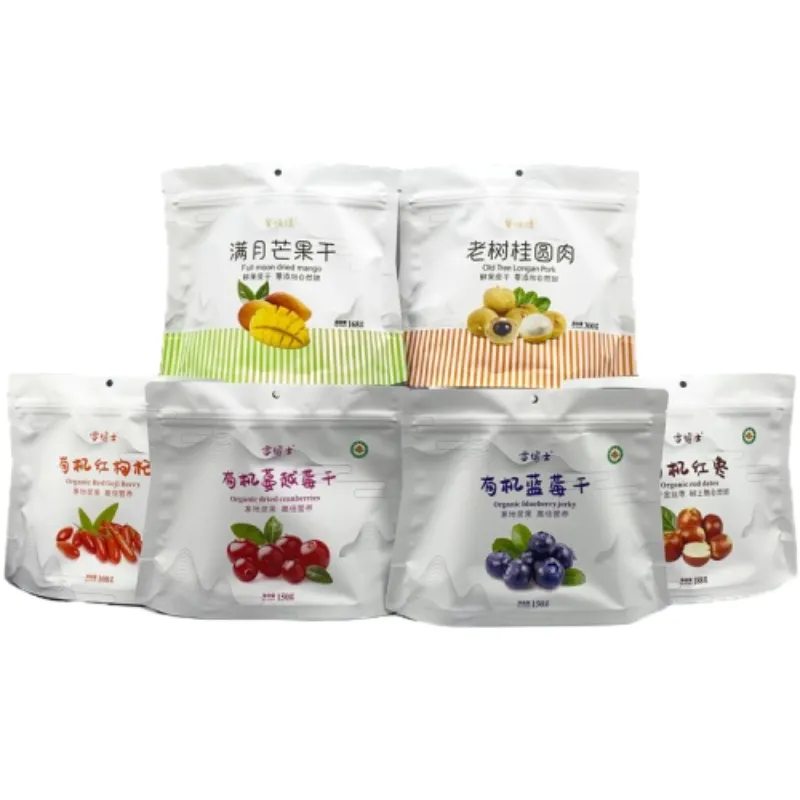
Process flow, testing, and service life
Dried Fruit Packaging Bags from Xiongan follow a pretty tight workflow: film extrusion (or sourcing certified base films) → surface treatment (corona) → lamination (solvent-free or low-solvent) → curing → slitting → pouch forming with zipper insertion → 100% vision inspection → random lab verification.
Tests I look for: seal strength (ASTM F88), WVTR (ASTM F1249), OTR (ASTM D3985), coefficient of friction (ASTM D1894), migration per FDA/EU, and drop/transport per ISTA 3A for e-commerce. In practice, moisture-sensitive dried mango stays crisp up to 9–12 months in high barrier, assuming proper roasting, A_w ≤0.6, and desiccant use. Dates and raisins, less oxygen-sensitive, still benefit from OTR ≤2.
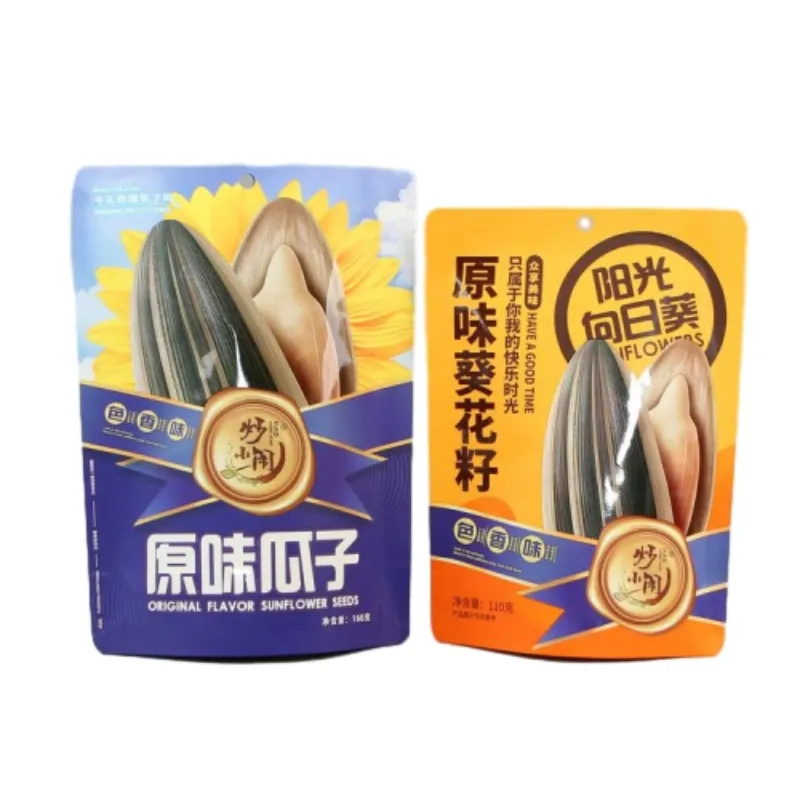
Vendor snapshot (what buyers compare)
| Vendor |
MOQs |
Lead time |
Customization |
Certs |
Barrier (OTR) |
| Junlan (Xiongan) |
≈10,000–20,000 pcs/size |
12–18 days after artwork |
Full: structure, zipper, window, finish |
BRCGS, ISO 9001, FDA/EU |
≤0.1 with AL; ≤2 with EVOH |
| Regional Converter A |
around 5,000–10,000 |
15–25 days |
Standard, fewer special finishes |
ISO 9001 |
≈1–5 (varies) |
| Online Marketplace B |
500–2,000 (stock prints) |
7–12 days |
Limited; mostly stock sizes |
Seller-dependent |
varies widely |
Customization that matters
Beyond logos, the smart money is on functional tweaks: a narrow, tamper-evident laser score for neat tears; oxygen scavenger label inside large packs; or a subtle clear window to showcase almonds while keeping the rest matte. It seems small, but shoppers notice.
Mini case studies
- California almond brand switched to Dried Fruit Packaging Bags with EVOH PE/PE; returns for “stale taste” dropped by 36% over two quarters, according to their QC notes.
- Middle East dates exporter adopted AL laminate for Ramadan gift SKUs; reported 12-month shelf stability in 35°C logistics with nitrogen flush—surprisingly resilient.
Bottom line: if you want fresher crunch, fewer rancidity complaints, and packaging that looks like it belongs in 2025, this category deserves a test run. Start with a pilot of 5–10k pouches, validate with ASTM F88 seals and F1249 WVTR, then scale.
Authoritative citations
- ASTM F88, F1249, D3985, D1894 – Standard test methods for flexible packaging barrier and seals.
- BRCGS Global Standard for Packaging Materials – Issue 6, food packaging safety framework.
- FDA 21 CFR (Food Contact) and EU Regulation No. 1935/2004 – Materials intended to contact food.
- ISTA 3A – Packaged-products for parcel delivery system shipment testing.

