Spend any time on a filling line lately and you’ll notice it: buyers keep switching to the Four-Side Sealing Packaging Bag. To be honest, it’s not hard to see why. The ultra-flat profile, crisp edges, and low-leak seams store well, ship better, and look clean on shelf. Many customers say they like the “boxed” feel without paying for a rigid box.
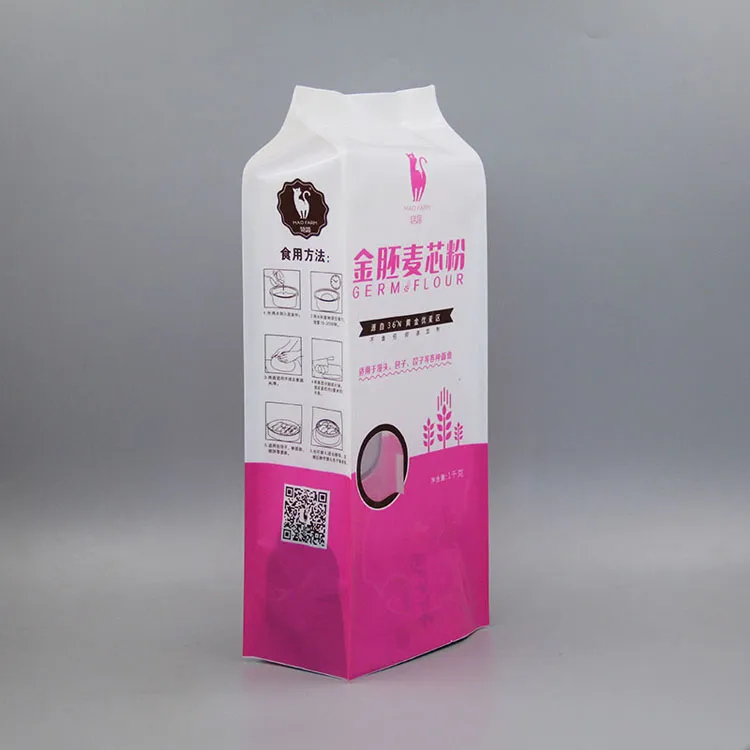
What’s trending
Two currents are reshaping this category: sustainable mono-material structures (PE/PE, PP/PP) and high-barrier, light-weight laminates that still pass pharma and food regulatory checks. Actually, brands want both—recyclability and barrier—so EVOH or AL-foil hybrids remain common while R&D pushes for solvent-free lamination and water-based inks.
Typical specifications (real-world values may vary)
| Parameter |
Spec (≈) |
Notes |
| Structures |
PET/AL/PE; PET/MetPET/PE; NY/PE; Mono-PE with EVOH |
Food/pharma-grade films, solvent-free lamination optional |
| Thickness |
80–150 μm |
Depends on product fragility and drop-test results |
| OTR / WVTR |
OTR ≈ 0.5–10 cc/m²·day; WVTR ≈ 0.5–5 g/m²·day |
Foil gives best barrier; mono-material slightly higher |
| Seal strength (ASTM F88) |
≥ 2.5 N/15 mm |
Four-side perimeter heat seals |
| Service life |
12–24 months |
Cool, dry storage; actual shelf life depends on fill |
| Features |
Tear notch, zipper, hang hole, lot-code window |
Up to 10-color gravure/flexo |
How it’s made (short version)
Materials are sourced and verified (FDA/EU compliant resins). Films are co-extruded or laminated, printed (gravure or low-VOC flexo), then pouch-making lines form four uniform heat seals. QC runs seal-strength (ASTM F88), tensile (ASTM D882), burst (ASTM F2054), and leak tests (ASTM D3078). Migration tests for food contact (EU 10/2011; GB 31604 series) kick in where relevant. I guess it sounds dry, but the repeatable seals are what keep spices crisp and syringes sterile.
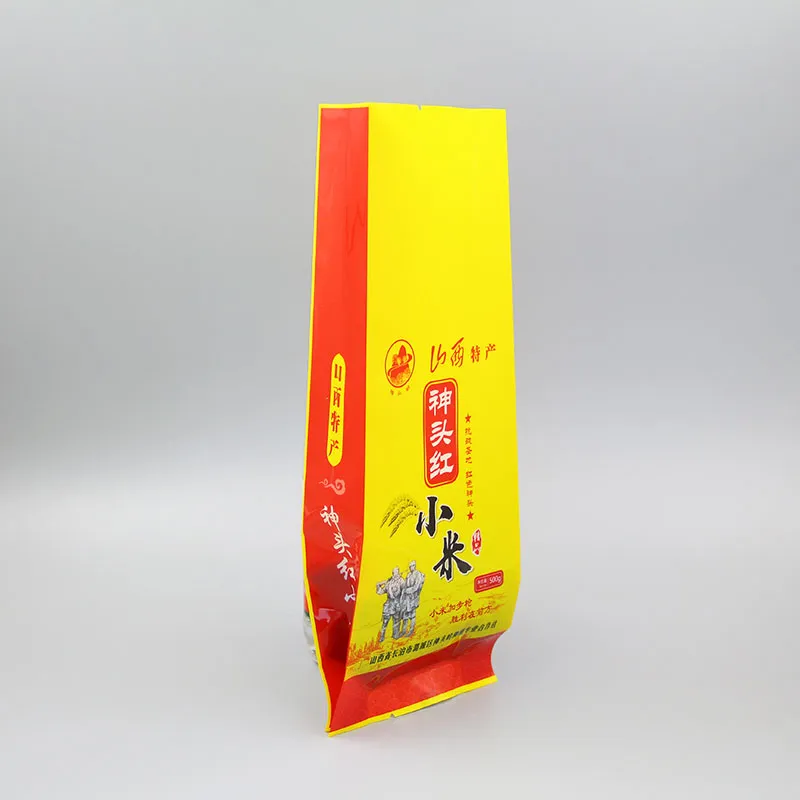
Where it’s used
- Foods: coffee sachets, dehydrated meals, jerky, sauces, condiments
- Pharma/health: test kits, blister card overwraps, sterile accessories
- Daily goods: face masks, wipes, personal care refills
- Industrial: fasteners, spare parts, desiccant packs
Four-Side Sealing Packaging Bag advantages: space-efficient, tamper-evident, excellent flat lay for code printing, and—surprisingly—smoother auto-feeding in many VFFS/HFFS lines.
Vendor snapshot (from our notebook)
| Vendor |
Lead time |
Compliance |
Customization |
| Xiongan-based maker (Hebei) |
12–18 days |
ISO 9001, BRCGS Packaging, SGS tests |
Mono-PE, EVOH, foil; 10-color print; zipper/valve |
| Competitor A |
20–25 days |
ISO 9001; partial EU docs |
Standard PET/PE, limited foil |
| Competitor B |
15–22 days |
BRCGS; HACCP |
Good on short runs; fewer mono-materials |
Customization checklist
Size (±1 mm), film stack, zipper or laser-tear, matte vs. gloss, hang hole, nitrogen-flush compatibility, child-resistant options, and carton-in-carton packing for export. Origin is Xiongxian Economic Development Zone (East Zone), Xiongan New Area, Hebei, China—handy access to Tianjin port, by the way.
Case study, quick and plain
A snack brand swapped to a Four-Side Sealing Packaging Bag with MetPET/PE, 120 μm. Lab data showed OTR drop from ≈18 to ≈1.2 cc/m²·day, and customer complaints about staling fell 37% in three months. They later moved to mono-PE with EVOH for a retail line; barrier was a bit higher OTR, but recyclability messaging boosted sell-through. Trade-offs—managed.
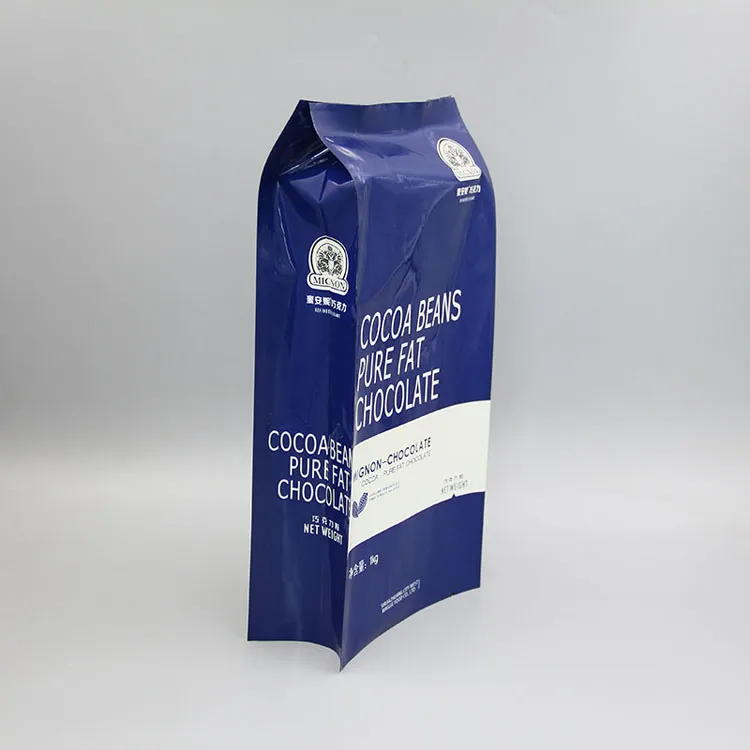
Compliance quick hits
Food-contact: FDA 21 CFR materials, EU 10/2011 overall migration, ISO 11607 for sterile barrier systems (when medical), and routine seal and tensile testing under ASTM methods. Most buyers ask for certificates of analysis per lot; in fact, that’s smart.
- ASTM F88 – Seal Strength of Flexible Barrier Materials
- FDA 21 CFR – Food Contact Materials
- EU Regulation No 10/2011 – Plastic FCM
- ISO 11607 – Packaging for Terminally Sterilized Medical Devices
- ASTM D882 – Tensile Properties of Thin Plastic Sheeting

