A Practical Guide to Choosing the Right Rice Packaging Bags (with real specs and shop-floor notes)
If you’re rethinking your types of rice packaging bags strategy, you’re not alone. In fact, mills from Southeast Asia to the Middle East keep telling me the same thing: shelf-life, sealing integrity, and brand presence now matter as much as unit cost. Based in the Xiongxian Economic Development Zone (East Zone), Xiongan New Area, Hebei Province, China, Junlan’s Rice and Xiaomi Packaging Bag line sits right in this conversation—purpose-built to protect premium grains, yet flexible on branding and formats.
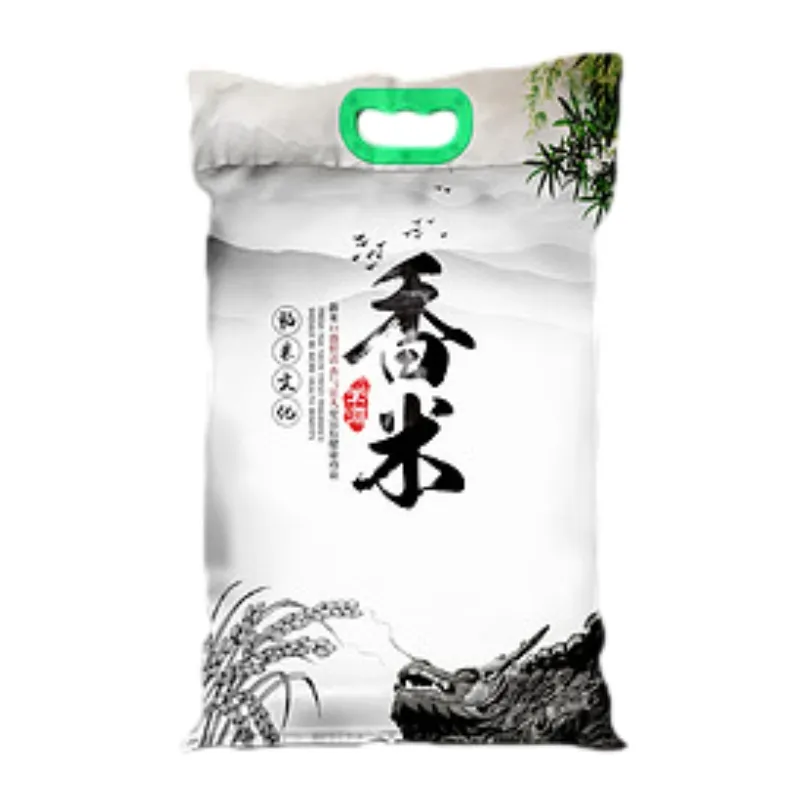
What’s trending now
Honestly, two currents are shaping the market: barrier performance and consumer convenience. Zippered pouches and quad-seal bags with degassing valves (for jasmine or fragrant varieties) are up. Print quality—especially matte/gloss accents—is becoming a point-of-sale weapon. And yes, recycled-content films are inching into spec sheets, although real-world usage varies by region.
Core bag formats you’ll actually use
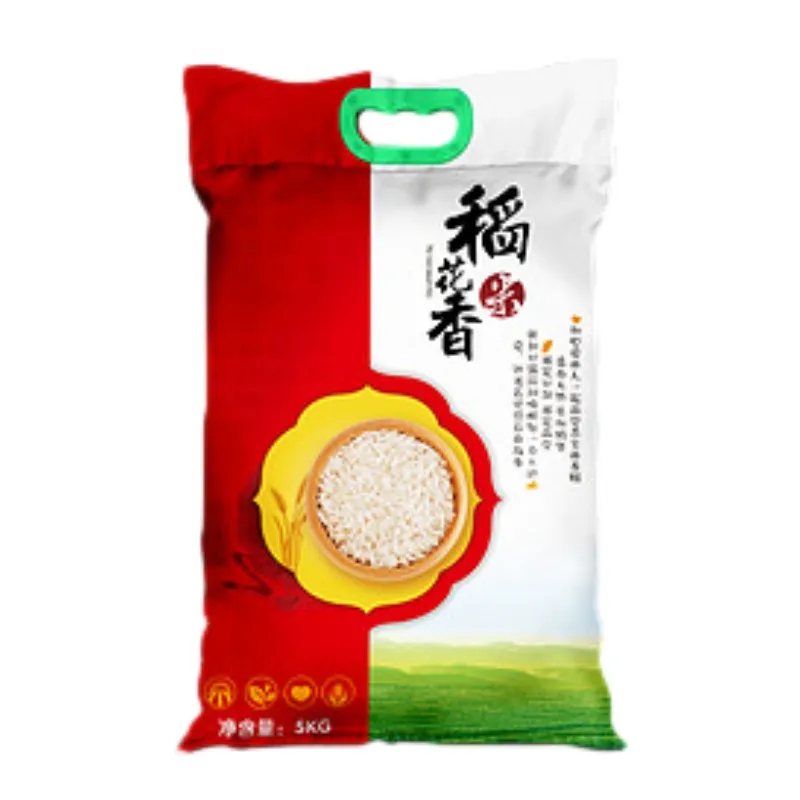
- Woven PP sacks with BOPP lamination (5–50 kg): rugged, stackable, great for export pallets.
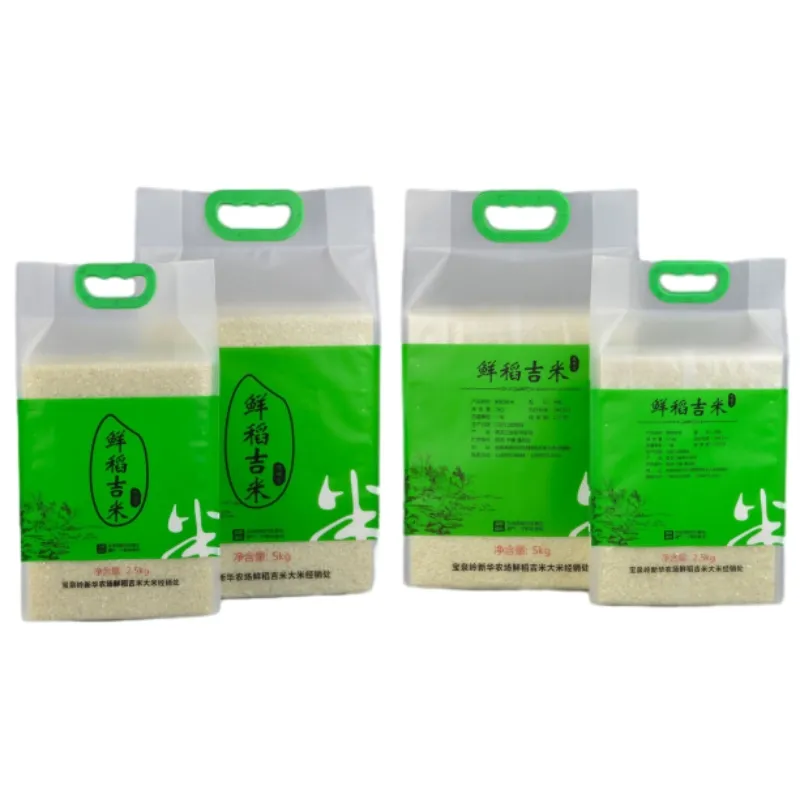
- Quad-seal and gusseted plastic pouches (1–10 kg): excellent shelf presence, good barrier.
- Stand-up pouches with zipper or slider (0.5–5 kg): retail-friendly; many customers say reclose feels premium.
- Kraft/PET/PE laminates (1–5 kg): paper touch, but with a functional moisture barrier.
Materials, process, and testing—how the sausage (well, bag) is made
Junlan typically uses structures like BOPP/PP woven, PET/PE, or PET/AL/PE for premium moisture/oxygen barriers. Printing is high-resolution gravure (up to 10 colors), followed by solventless lamination, gusseting, and optional features: die-cut handle, zipper, one-way valve, and tear notch. To be honest, the boring part—testing—is what saves cost downstream:
- ASTM D882 tensile and D1004 tear for film strength.
- ASTM F88 seal strength and F1921/F1980 aging simulations.
- ASTM F1249 water vapor transmission (WVTR) and F1927 oxygen transmission (OTR).
- Food-contact compliance: FDA 21 CFR, EU 10/2011; plant systems with ISO 22000 / FSSC 22000.
Service life in normal warehousing: ≈12–24 months for most types of rice packaging bags, assuming RH 50–60% and temps under 30°C. Real-world use may vary—hot, humid ports are ruthless.
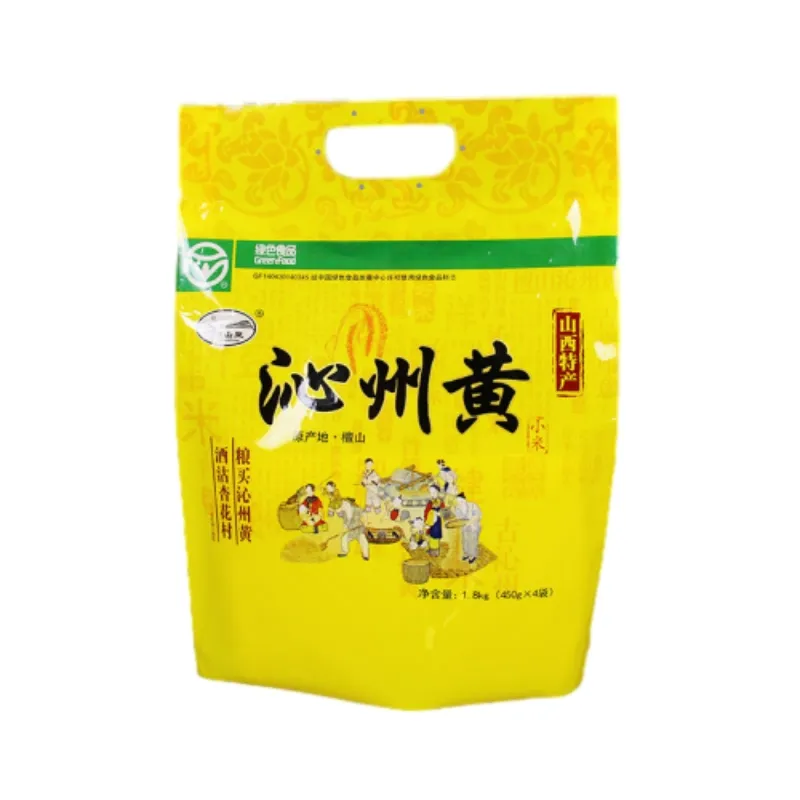
Product snapshot: Rice and Xiaomi Packaging Bag
| Spec | Typical Value (≈) |
|---|
| Structures | BOPP/PP woven; PET/PE; PET/AL/PE (premium barrier) |
| Thickness | 80–180 μm for laminates; woven 60–120 GSM + film |
| Sizes/Capacity | 0.5–50 kg formats (custom die lines available) |
| Barrier | OTR: |
| Features | Zipper, valve, matte/gloss, anti-slip, laser scoring |
| Certifications | ISO 22000, FSSC 22000; FDA/EU compliant materials |
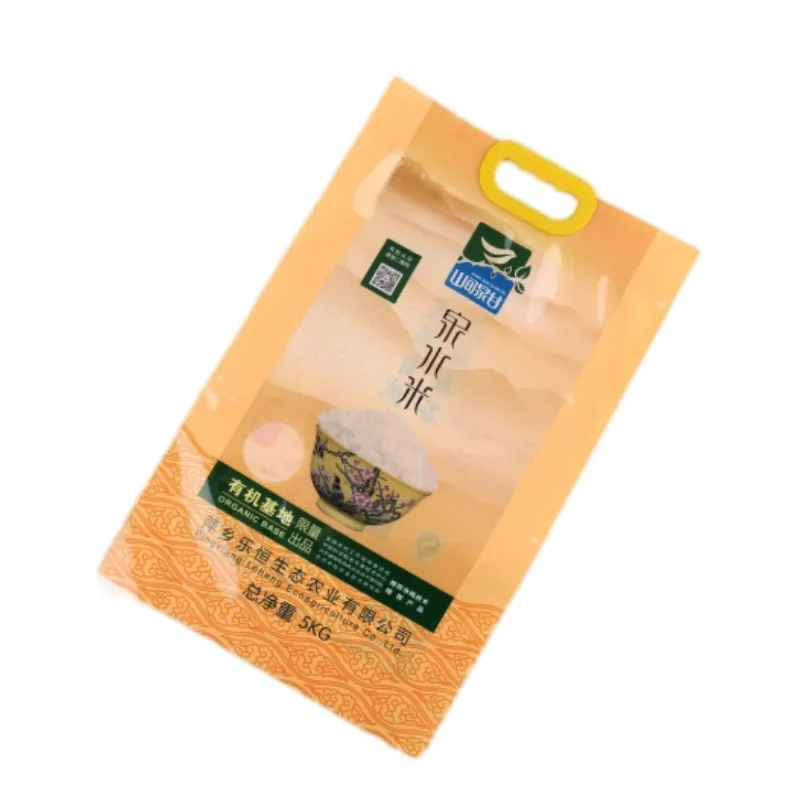
Vendor landscape (my quick, admittedly imperfect comparison)
| Vendor |
Strengths |
Watch-outs |
| Junlan (Xiongan) |
Strong gravure print, consistent seal strength, agile MOQs |
Lead times spike pre-harvest season |
| Traditional sack supplier |
Lowest cost for 25–50 kg woven PP |
Limited barrier; print quality varies |
| Generic importer |
Fast quotes; broad catalog |
Spec transparency can be fuzzy; verify test reports |
Applications, industries, and feedback
Use cases include jasmine, basmati, sticky rice, millet (xiaomi), pulses, and even pet grains. Retailers like the “grab-ability” of quad-seal bags; warehouse managers love skid stability of laminated woven sacks. Surprisingly, a few boutique brands reported a 6–9% sales lift after moving to matte-finish types of rice packaging bags with zipper.
Mini case study: regional mill, 10 kg line
A South Asia mill shifted from woven-only 10 kg bags to PET/AL/PE quad-seals. After ASTM F1249 tests showed WVTR ≈0.8 g/m²·day, moisture complaints dropped by 70% over two monsoon cycles. To be honest, the zipper cost a bit more—but returns were real: fewer returns, better shelf look, and smoother e-comm shipping due to tighter dimensions.
Customization checklist
- Artwork: CMYK + spot colors, matte/gloss windows.
- Functional: zipper/slider, valve, anti-slip, handle, laser score.
- Compliance: FDA/EU DoC, migration tests, FSSC 22000 audit availability.
- Logistics: pallet pattern, carton or bale pack, barcodes.
If you’re mapping your upgrade path for types of rice packaging bags, start with barrier targets (OTR/WVTR), then choose structure, then aesthetics. It’s boring but works.
References
- ASTM International: D882, F88, F1249, F1927 test standards.
- FDA 21 CFR 177 (Indirect Food Additives: Polymers).
- EU Regulation No 10/2011 on plastic materials for food contact.
- ISO 22000 and FSSC 22000 Food Safety Management Systems.

