The Crucial Role of Advanced Packaging in Agriculture
In the agricultural and chemical sectors, the integrity and safety of products are paramount. Efficient and robust packaging solutions are not merely container111s but critical components that ensure product stability, extend shelf life, and protect against environmental degradation. This article delves into the technical aspects and market dynamics surrounding advanced packaging solutions, with a particular focus on the fertilizer packaging bag, as well as related solutions like plastic pesticide bag, pesticide packaging bag, vermicompost packaging bags, and fertilizer packaging pouch.
The demand for high-performance packaging in these industries is driven by stringent regulatory requirements, the need for enhanced product preservation, and operational efficiencies in storage and transport. Modern packaging must withstand diverse environmental conditions, including varying temperatures, humidity, and UV exposure, while maintaining the chemical stability of its contents. This necessitates sophisticated material science and precision manufacturing techniques.
Industry Trends and Market Dynamics in Agricultural Packaging
The global market for agricultural packaging is experiencing robust growth, propelled by increasing agricultural output, advancements in farming techniques, and a rising focus on sustainable and efficient supply chains. Key trends include the adoption of flexible packaging formats, which offer superior barrier properties, reduced material usage, and lower transportation costs compared to rigid alternatives. The market is also seeing a shift towards multi-layer co-extruded films and laminated structures that provide enhanced moisture and oxygen barriers, crucial for preserving the efficacy of fertilizers and pesticides.
- Sustainability Initiatives: A growing emphasis on eco-friendly packaging solutions, including recyclable and biodegradable materials, is influencing product development. Manufacturers are investing in mono-material solutions that simplify recycling processes without compromising performance.
- Smart Packaging Technologies: The integration of QR codes, RFID tags, and other traceability features is becoming more prevalent, aiding in supply chain management, anti-counterfeiting efforts, and consumer engagement.
- Enhanced Barrier Properties: As agricultural inputs become more sophisticated, the need for packaging that offers superior protection against moisture, oxygen, UV light, and chemical interaction is critical. This ensures the potency and shelf life of products like a fertilizer packaging bag.
- Convenience and User-Friendliness: Designs that facilitate easy pouring, resealing, and disposal are gaining traction, improving the user experience for farmers and agricultural workers.
According to market research, the global agricultural packaging market is projected to reach approximately USD 6.5 billion by 2027, growing at a CAGR of 5.1% from 2022 to 2027. This growth is significantly driven by demand in developing economies and the continuous innovation in material science and packaging machinery.
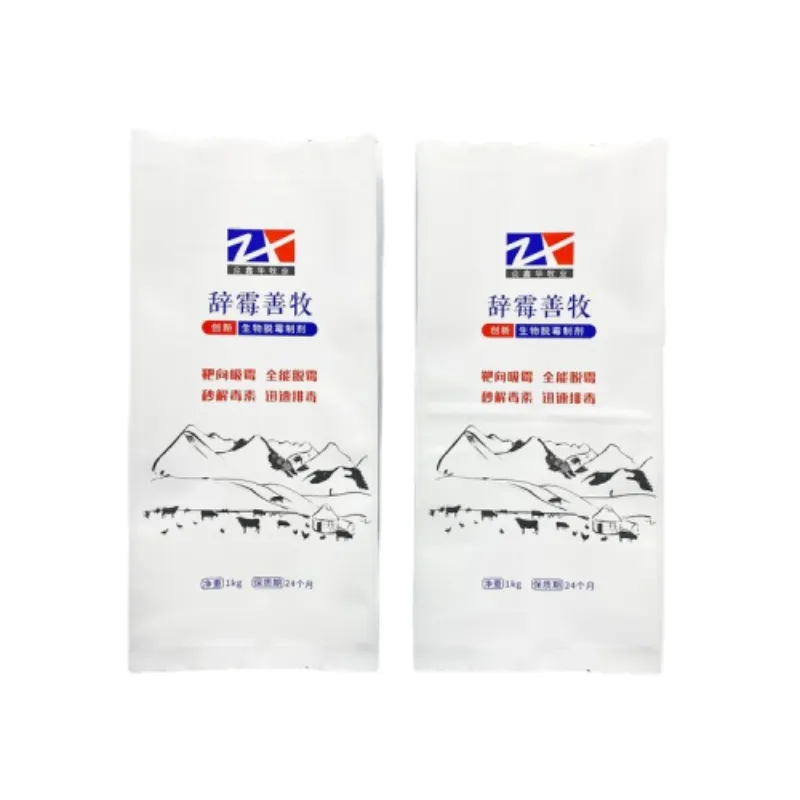
Manufacturing Process of Fertilizer and Pesticide Packaging Bags
The production of high-quality fertilizer packaging bag solutions involves a multi-stage, technically precise process, ensuring the final product meets rigorous performance and safety standards. This process leverages advanced polymers and sophisticated machinery to create durable and protective packaging.
Materials Utilized
- Polypropylene (PP): Known for its high tensile strength, chemical resistance, and excellent moisture barrier properties. Commonly used for woven bags due to its durability.
- Polyethylene (PE): Offers flexibility, impact resistance, and good sealability. High-Density Polyethylene (HDPE) and Low-Density Polyethylene (LDPE) are both used, often in multi-layer film structures.
- BOPP (Biaxially Oriented Polypropylene): Provides superior clarity, gloss, and printability, often laminated onto woven PP bags to enhance aesthetics and barrier properties.
- Specialized Barrier Films: Inclusions like EVOH (Ethylene Vinyl Alcohol) or metallized films are used for extreme oxygen or moisture barrier requirements, critical for pesticide packaging bag solutions.
Manufacturing Stages (Schematic Steps)
- Extrusion of Granules:
- Polymer granules (PP, PE) are melted and extruded through a die to form continuous films or tapes.
- For woven bags, PP tapes are stretched and wound onto bobbins. For flexible pouches, flat or tubular films are produced.
- Weaving/Film Blowing:
- (For Woven Bags): PP tapes are woven into a fabric on circular or flat looms.
- (For Flexible Films): PE or multi-layer films are blown or cast into required gauges and widths.
- Lamination (Optional but Common):
- Extruded films, BOPP films, or metallized layers are bonded to the woven fabric or other film layers using adhesive lamination or extrusion lamination. This enhances barrier properties and print surface for a fertilizer packaging pouch.
- Printing:
- High-resolution gravure or flexographic printing methods are employed to apply brand logos, product information, and regulatory markings directly onto the film or laminated surface.
- Precision color registration and durable inks ensure long-lasting print quality.
- Bag/Pouch Forming:
- The printed and laminated material is cut, folded, and sealed into specific bag or pouch configurations (e.g., pillow bags, stand-up pouches, gusseted bags).
- Automated machines ensure consistent dimensions and strong seam integrity.
- Quality Control & Testing:
- Each batch undergoes rigorous testing for material properties (e.g., tensile strength, tear resistance, dart drop impact), barrier performance (e.g., WVTR – Water Vapor Transmission Rate, OTR – Oxygen Transmission Rate), seal strength, and print adhesion.
- Adherence to international standards such as ISO 9001, ASTM, and specific industry guidelines is strictly maintained.
Testing Standards and Service Life
Our packaging solutions are manufactured in compliance with international standards such as ISO 9001 for quality management and relevant ASTM standards for packaging materials. Typical service life for a high-quality plastic pesticide bag or fertilizer packaging ranges from 1 to 3 years under normal storage conditions, maintaining full functionality. Specific applications requiring enhanced UV resistance can extend this, as specialized additives can provide UV stability for up to 12 months of direct outdoor exposure.
Target Industries and Application Advantages
These sophisticated packaging solutions primarily serve the agricultural, chemical, and horticultural industries. Typical advantages in application scenarios include:
- Product Protection: Superior barrier properties prevent moisture ingress, oxidation, and contamination, preserving the efficacy of hygroscopic fertilizers and sensitive pesticides. This translates to reduced product loss and improved shelf life.
- Corrosion Resistance: For chemical fertilizers and certain pesticides, the packaging materials are selected to be chemically inert, preventing interaction with the product and ensuring package integrity.
- Energy Saving: Lightweight flexible packaging reduces fuel consumption during transportation compared to rigid container111s, leading to lower logistical costs and reduced carbon footprint.
- Cost-Effectiveness: Optimized material usage and efficient manufacturing processes result in a lower cost per unit of packaging, benefiting clients' bottom lines.
- Brand Enhancement: High-quality printing capabilities allow for vibrant branding and clear product information, enhancing market visibility and consumer trust.
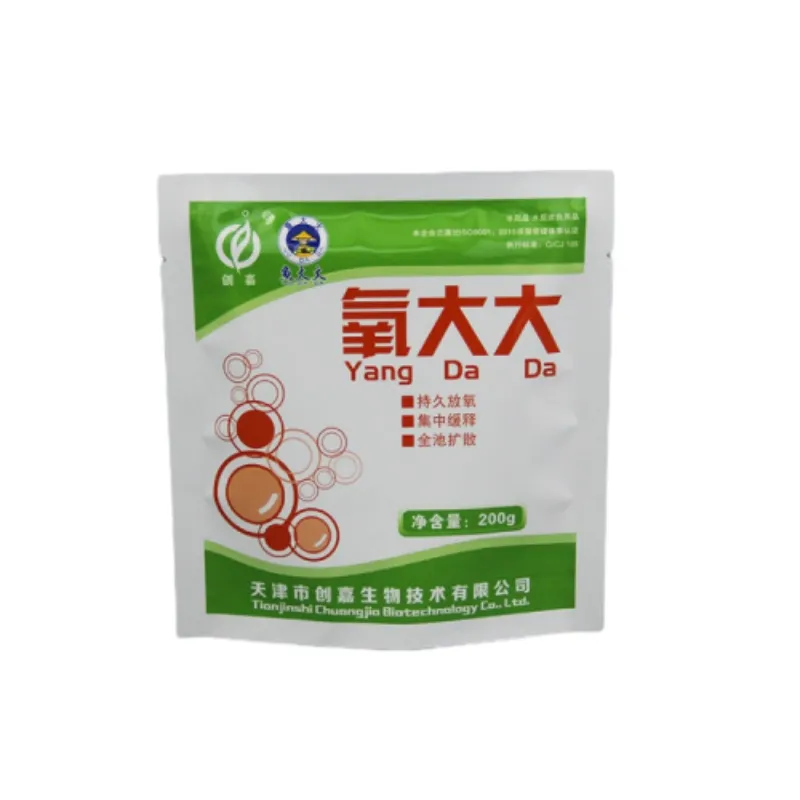
Technical Specifications and Performance Parameters
Understanding the precise technical specifications is crucial for selecting the optimal fertilizer packaging bag for specific product requirements. Our range of packaging solutions is engineered to meet diverse demands in terms of strength, barrier properties, and dimensional stability.
Typical Product Specification Table: Fertilizer & Pesticide Packaging Bags
| Parameter |
Value/Range |
Test Method/Standard |
| Material Composition |
BOPP/PP Woven, Multi-layer PE, PET/AL/PE |
Internal Lab Testing |
| Thickness (Film/Laminate) |
70-200 microns (flexible), 60-120 gsm (woven) |
ASTM D374 / ISO 4593 |
| Tensile Strength (MD/TD) |
>50 MPa / >40 MPa |
ASTM D882 / ISO 527-3 |
| Tear Resistance (Elmendorf) |
>200 gf/mil |
ASTM D1922 |
| Puncture Resistance |
>50 N |
ASTM D5748 |
| Water Vapor Transmission Rate (WVTR) |
<5 g/m²/24h (25°C, 90% RH) |
ASTM F1249 / ISO 15106-3 |
| Oxygen Transmission Rate (OTR) |
<10 cm³/m²/24h (23°C, 0% RH) |
ASTM D3985 / ISO 15105-2 |
| Seal Strength |
>30 N/15mm |
ASTM F88 |
| UV Resistance (Optional) |
Up to 12 months (with additives) |
ASTM G154 |
These parameters ensure that the packaging not only contains the product but also actively protects it from external elements that could compromise its quality or effectiveness. For instance, the low WVTR and OTR values are particularly vital for preserving moisture-sensitive granular fertilizers and preventing the degradation of active chemical compounds in a pesticide packaging bag.
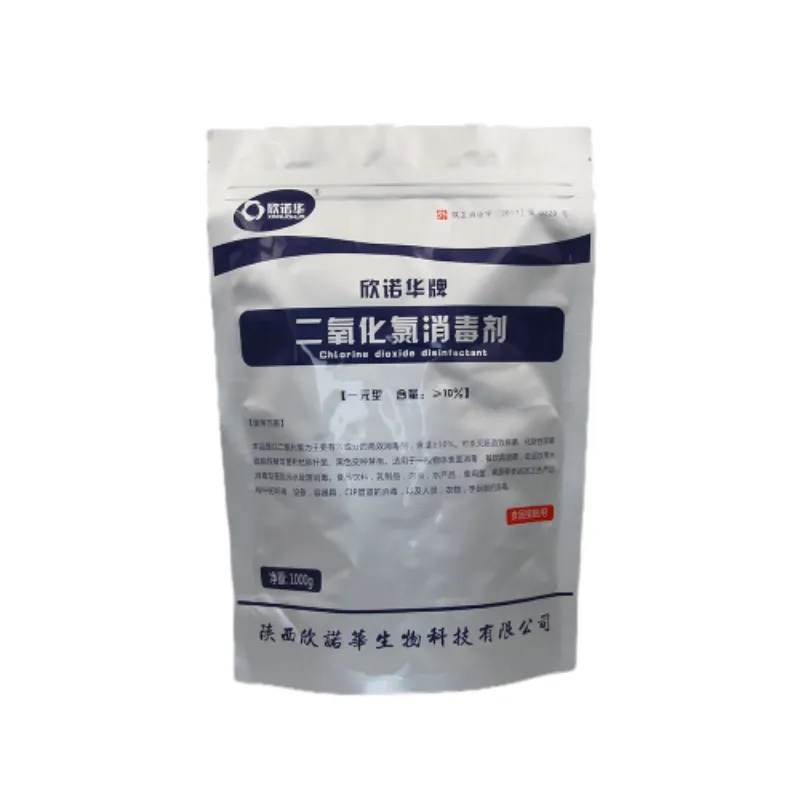
Application Scenarios and Case Studies
Our advanced packaging solutions are deployed across a broad spectrum of agricultural and chemical applications, demonstrating their versatility and superior performance in diverse operational environments.
Key Application Scenarios
- Granular Fertilizers: For products like NPK, Urea, DAP, requiring robust moisture barriers and high burst strength to prevent leakage and caking during transport and storage. Woven PP bags with BOPP lamination are typical.
- Liquid Pesticides and Herbicides: Requiring chemical-resistant multi-layer pouches (e.g., stand-up pouches with spouts) that prevent product degradation and ensure safe handling.
- Powdered Pesticides and Fungicides: Demanding excellent dust-proof seals and moisture barriers, often utilizing laminated films to prevent clumping and maintain efficacy. This is where a specialized pesticide packaging bag excels.
- Organic Fertilizers and Vermicompost: For products like vermicompost packaging bags, breathability can sometimes be designed in (e.g., micro-perforations) while still offering adequate protection and preventing premature degradation.
- Seed Packaging: Requiring high barrier properties to maintain seed viability by controlling moisture and oxygen levels, often using vacuum-sealed or modified atmosphere packaging.
Application Case Study: Enhancing Shelf-Life for a Major Fertilizer Producer
Client: AgriChem Solutions, a leading producer of specialty granular fertilizers in Southeast Asia.
Challenge: AgriChem Solutions faced significant challenges with their existing packaging. Their hygroscopic granular fertilizers were experiencing caking and moisture absorption during storage and transit in high-humidity environments, leading to product loss and customer dissatisfaction. The original woven PP bags lacked sufficient barrier properties.
Solution: We collaborated with AgriChem Solutions to develop a custom fertilizer packaging bag utilizing a high-performance BOPP laminated woven PP structure. This design incorporated a specialized barrier layer that significantly reduced the Water Vapor Transmission Rate (WVTR).
Results: Over a six-month trial period, the new packaging demonstrated a 75% reduction in moisture absorption and caking incidents compared to their previous solution. This extended the product's shelf life by an average of 4 months, drastically reduced product returns, and improved customer satisfaction. The vibrant BOPP printing also enhanced brand visibility in competitive markets.
Application Case Study: Secure Packaging for a Regional Pesticide Distributor
Client: GreenGrow Distributors, a regional supplier of liquid and powdered pesticides.
Challenge: GreenGrow required a highly durable and chemically resistant packaging solution for their range of concentrated liquid and powdered pesticides. Their previous packaging was prone to leaks and tears, posing safety risks and product loss. They needed a reliable pesticide packaging bag that could withstand rough handling and chemical interaction.
Solution: We engineered a multi-layer flexible pouch featuring an aluminum foil barrier layer and a robust PE inner liner for chemical compatibility and superior seal strength. For the powdered products, the design included an anti-static layer and a reclosable zipper for user convenience and extended freshness.
Results: The new packaging virtually eliminated leaks and tears, enhancing safety for handlers and consumers. The superior barrier properties maintained the potency of the pesticides over longer periods. GreenGrow reported a 90% reduction in packaging-related complaints within the first year and improved inventory turnover due to increased product stability.
Technical Advantages and Competitive Differentiation
Our packaging solutions offer distinct technical advantages that set them apart in the market, providing measurable benefits to our clients.
- Advanced Barrier Technology: Utilizing multi-layer co-extruded films and sophisticated laminates (e.g., incorporating metallized PET, EVOH, or AL foil) to achieve ultra-low WVTR and OTR values, surpassing industry averages. This ensures maximum product integrity for every fertilizer packaging pouch.
- High Mechanical Strength: Engineered for superior tear, puncture, and burst resistance, critical for heavy-duty applications and preventing product loss during logistics. Our woven PP bags can withstand dropping from heights of up to 2 meters without failure for typical 25kg loads.
- Precision Printing & Graphics: State-of-the-art gravure and flexographic printing capabilities deliver photo-quality graphics and precise color matching (up to 10 colors), significantly enhancing brand appeal and differentiation.
- Chemical Compatibility: Material selection is rigorously tested for compatibility with a wide range of fertilizers and pesticides, preventing chemical reactions that could degrade the product or the packaging itself.
- UV Stabilization: Optional UV inhibitors integrated into the film structure provide extended outdoor exposure stability, crucial for products stored in open or semi-sheltered agricultural environments.
- Customization & Flexibility: Ability to produce a wide array of sizes, formats (e.g., stand-up pouches, gusseted bags, woven sacks), and features (e.g., reclosable zippers, handles, spouts, anti-slip coatings).
Competitive Landscape: Vendor Comparison
When evaluating packaging vendors, it's essential to consider material quality, manufacturing precision, customization capabilities, and after-sales support. Below is a comparative overview highlighting our strengths against typical industry offerings for a plastic pesticide bag or fertilizer bag.
| Feature/Criteria |
Our Offering |
Standard Industry Offering |
| Barrier Performance (WVTR) |
<5 g/m²/24h (typical) with advanced laminates |
10-20 g/m²/24h for basic PE/PP |
| Puncture Resistance |
High (multi-layer, >50 N) |
Moderate (single-layer PE, 20-30 N) |
| Print Quality |
Photo-quality Gravure (up to 10 colors) |
Basic Flexo (4-6 colors, lower resolution) |
| Customization Options |
Extensive (materials, sizes, features, sustainability) |
Limited to standard sizes and materials |
| Certifications & Compliance |
ISO 9001, Food-grade (where applicable), ASTM |
Varies, often basic compliance |
| Lead Time for Custom Orders |
4-6 weeks (after design approval) |
6-10 weeks or more |
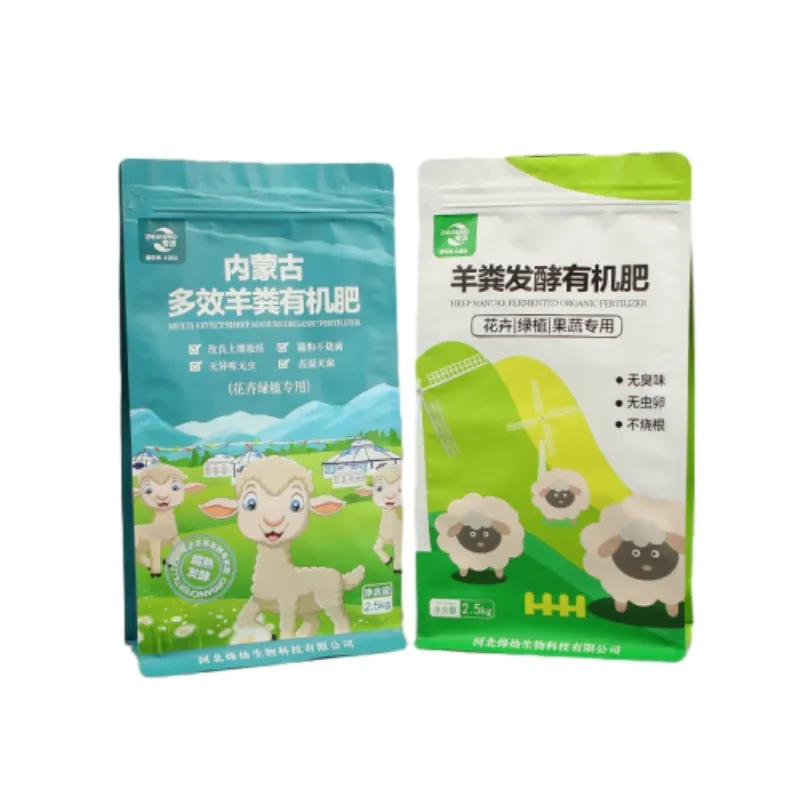
Customized Solutions and Partner Collaboration
Understanding that each product and market has unique requirements, we specialize in providing bespoke packaging solutions. Our approach involves close collaboration with clients from concept to delivery, ensuring that every fertilizer packaging bag or pesticide pouch is perfectly aligned with their operational and marketing objectives.
Our Customization Process
- Consultation & Needs Assessment: In-depth discussion of product characteristics (e.g., chemical composition, hygroscopy, weight), storage conditions, transportation methods, target market, and branding requirements.
- Material & Structure Design: Expert recommendations on optimal material combinations (e.g., multi-layer laminates, co-extruded films, woven structures) to achieve desired barrier properties, mechanical strength, and cost-efficiency for the specific vermicompost packaging bags or other products.
- Graphic Design & Pre-press: Collaborative design process for artwork, ensuring high-impact visuals and compliance with regulatory labeling requirements.
- Prototyping & Testing: Production of samples for client evaluation and rigorous in-house testing to validate performance against specified parameters (e.g., drop tests, seal integrity, accelerated aging tests).
- Production & Quality Assurance: Scalable manufacturing with strict adherence to ISO 9001 quality management systems, ensuring consistent product quality across all batches.
Long-Standing Partnerships and Authoritative Certifications
With over 20 years of experience in the packaging industry, we have cultivated enduring partnerships with leading agricultural input manufacturers, chemical companies, and horticultural suppliers across continents. Our commitment to quality is underscored by:
- ISO 9001:2015 Certification: Demonstrating our adherence to a robust quality management system for the design, development, and production of flexible packaging.
- FDA/EU Compliance: For packaging materials that may indirectly contact food products (e.g., certain organic fertilizers), we ensure compliance with relevant food-grade safety standards.
- Authoritative Test Data: All products are accompanied by comprehensive test reports from accredited laboratories, validating their performance metrics.
- Industry Recognition: Our work has been recognized by various industry associations for innovation in sustainable and high-performance packaging solutions.
These credentials provide our clients with the assurance that they are partnering with an expert and authoritative provider in the field of industrial packaging.
Trustworthiness: FAQs, Fulfillment, and Support
Building trust with our B2B clients is foundational to our business. We achieve this through transparent processes, clear commitments, and comprehensive support services for every fertilizer packaging bag we produce.
Frequently Asked Questions (FAQs)
- Q: What is the minimum order quantity (MOQ) for custom fertilizer packaging bags?
A: Our MOQ typically ranges from 10,000 to 20,000 units, depending on the complexity of the design and material specifications. We recommend discussing specific project needs with our sales team.
- Q: Can your packaging handle hazardous chemical products?
A: Yes, we offer specialized multi-layer structures and material compositions specifically designed for hazardous chemicals, ensuring compliance with relevant transport and storage regulations for a pesticide packaging bag.
- Q: What sustainable packaging options do you offer?
A: We provide recyclable mono-material solutions (e.g., all-PE laminates), options with recycled content, and are actively developing biodegradable alternatives to meet evolving sustainability goals.
- Q: How do you ensure color consistency in printing across different batches?
A: We utilize advanced color management systems (e.g., X-Rite) and conduct rigorous in-process quality checks, including spectrophotometric analysis, to ensure precise color matching and consistency.
- Q: Can I get samples of specific packaging types before placing a bulk order?
A: Absolutely. We can provide generic samples of our standard packaging formats, and for custom designs, we offer pre-production prototypes for approval.
Lead Time and Fulfillment Details
Our standard lead time for custom orders, from final design approval to shipment, typically ranges from 4 to 6 weeks. This timeline allows for meticulous material sourcing, production scheduling, quality control, and logistics coordination. Expedited options may be available depending on current production schedules and order specifics. We operate a streamlined supply chain to ensure timely delivery to both domestic and international clients, managing logistics from our facilities to your designated receiving points.
Warranty Commitments
We stand behind the quality of our products. All our packaging solutions, including every fertilizer packaging pouch, come with a warranty against manufacturing defects and material failures under normal storage and usage conditions for a period of 12 months from the date of delivery. Our warranty covers defects in material and workmanship, ensuring the packaging performs as per agreed specifications. Detailed warranty terms are provided with each quotation and order confirmation.
Dedicated Customer Support and After-Sales Service
Our commitment extends beyond delivery. We offer dedicated customer support through a team of experienced account managers and technical specialists. Clients have direct access to support for any queries regarding product performance, technical specifications, reordering, or addressing unforeseen issues. Our after-sales service includes troubleshooting, root cause analysis for any reported issues, and proactive recommendations for optimizing packaging performance based on operational feedback. We strive for a partnership approach, ensuring continuous client satisfaction and operational efficiency.
Conclusion
The choice of packaging, particularly for critical agricultural and chemical inputs such as fertilizers and pesticides, is a strategic decision that impacts product integrity, supply chain efficiency, and brand reputation. Investing in high-quality, technically advanced packaging like the specialized fertilizer packaging bag solutions discussed herein is not merely an expense but a critical investment in product protection, market competitiveness, and long-term sustainability. Our expertise, commitment to quality, and comprehensive support services ensure that our clients receive packaging solutions that consistently meet and exceed their expectations, safeguarding their valuable products and enhancing their operational success.
References
- Smith, J. A., & Green, B. K. (2021). Innovations in Polymer Science for Sustainable Packaging. Journal of Applied Packaging Research, 15(2), 87-102.
- Global Agricultural Packaging Market Report 2022-2027. (2022). MarketsandMarkets Research.
- International Organization for Standardization. (2015). ISO 9001:2015 - Quality management systems — Requirements.
- American Society for Testing and Materials. (Various Dates). ASTM Standards on Packaging.

